Weight And Balance · Volume 3
A Trailer Is Always Attached — the Baseline Load Plan
Introduction
⭐⭐ The owner’s standing policy, set 2026-09-03: one trailer or the other is always attached when overlanding. The kayak trailer goes to rivers and state parks; a purpose-built 4 × 6 goes down the deep two-tracks. The gear lives in bins that move between them — the power system, nearly all the tools, all bedding and clothing, the whole kitchen kit, the grill, the table and the chairs.
🔴 That policy retires the premise this volume used to be built on. The volume previously argued that the deep two-track trip carried no trailer, that this was the majority case, and that it was 120 lb over the label. That trip is not going to happen, so the arithmetic built on it has been rebuilt rather than annotated. The no-trailer figures survive below as a labelled contrast, because the contrast is what makes the policy legible — but they are not the plan.
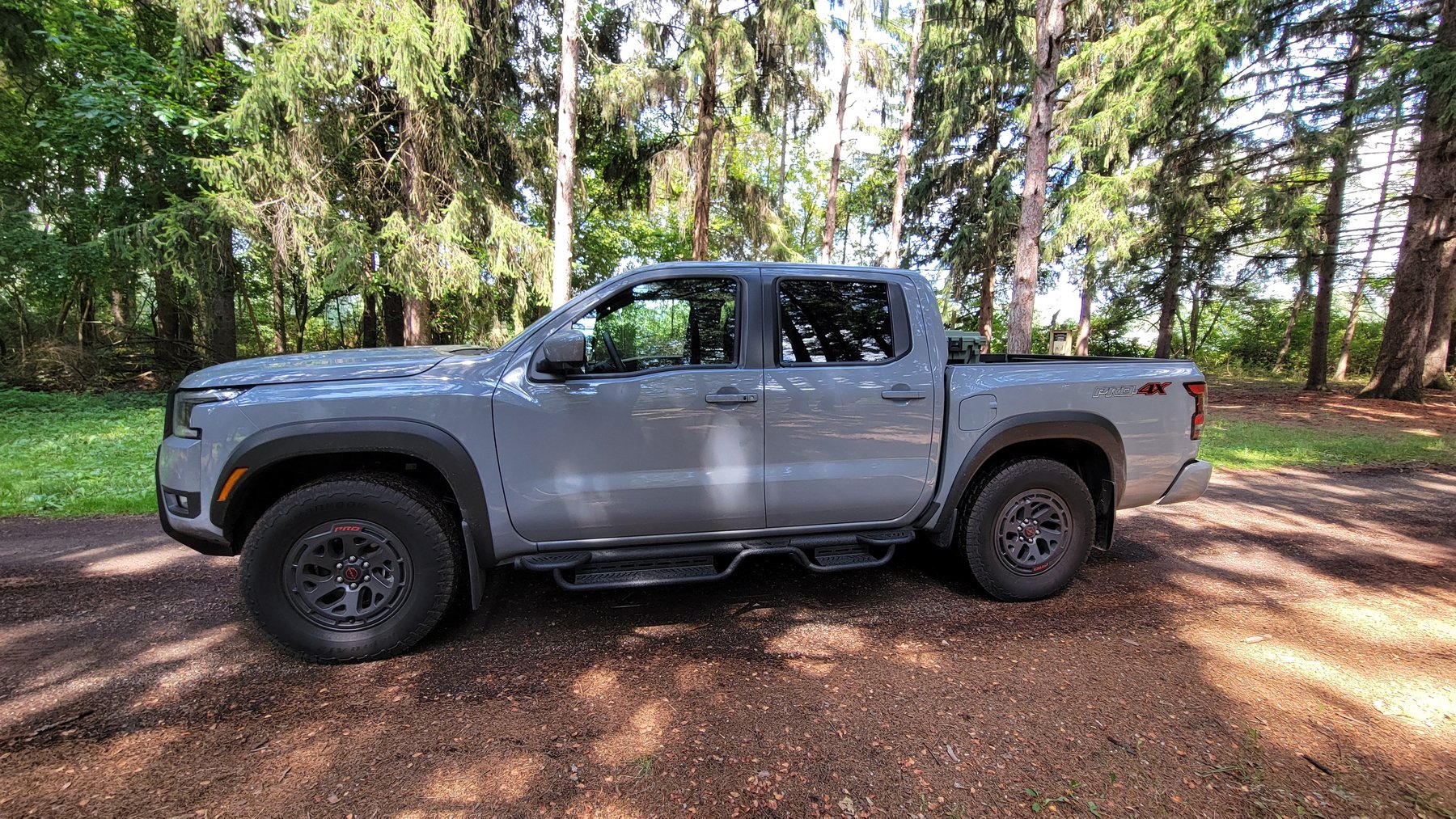
What the policy changes is what the truck is for. The truck now carries only what is bolted to it, riding in it, or medical: DECKED, the rack, the tent, the awning, the running boards, the radios, the hitch, two adults and the CPAP. Everything else is bin gear, and bin gear rides on whichever trailer is coupled.
⭐ The result is the first configuration in this project’s history that fits. The truck lands at 1,075.5 lb against the 1,100 lb label — under by 24.5 — where every previous plan was over. Not one pound of that came from giving something up. It came from a policy decision about where things ride.
🔴 But the payload problem has been replaced by a stability problem, and the new one is the more dangerous of the two. The tongue is 101.5 lb, 8.50 percent of trailer gross, against a 10 percent floor. A trailer below its sway floor does not degrade gradually the way an overloaded truck does — it becomes uncontrollable. That is the open item this volume now exists to close.
3.1 The baseline numbers
⚠ These tables are generated by build_weight_tables.py from the same item list the loadout calculator uses. Nothing here is hand-typed, so the volume and the tool cannot drift. Re-run it after any change.
3.1.1 The truck
Table 1 — The truck
| Item | ea | qty | total |
|---|---|---|---|
| Driver - MEASURED | 220 | 1 | 220 |
| DECKED drawer system | 177 | 1 | 177 |
| Passenger - ACTUAL | 172 | 1 | 172 |
| Rooftop tent, Smittybilt Gen2 XL | 139 | 1 | 139 |
| XTR3 bed rack | 115 | 1 | 115 |
| Topoak 270 awning + 18 in uprights | 64 | 1 | 64 |
| EYOUHZ running boards, pair | 47 | 1 | 47 |
| Radios and antennas (HTs) | 19.8 | 1 | 19.8 |
| Rhino adjustable receiver hitch | 15.2 | 1 | 15.2 |
| CPAP kit - AirSense 10 + converter | 5 | 1 | 5 |
| Truck items | 974 | ||
| Tongue weight from the trailer | 101.5 | ||
| TRUCK TOTAL | 1,075.5 |
Table 2 — The truck
| lb | |
|---|---|
| Payload, door-jamb label | 1,100 |
| Truck total | 1,075.5 |
| UNDER BY | ✅ 24.5 |
3.1.2 The trailer
Table 3 — The trailer
| Item | ea | qty | total | in fwd of axle | → tongue |
|---|---|---|---|---|---|
| 1x6 decking, ten boards | 150 | 1 | 150 | 0 | 0 |
| Kayak, Tarpon 120 | 65 | 2 | 130 | 0 | 0 |
| E-bike, Lectric XPeak 2.0 | 65 | 2 | 130 | 0 | 0 |
| 80/20 1530 rail system | 116 | 1 | 116 | 0 | 0 |
| Tools, spares, recovery kit | 49.7 | 1 | 49.7 | 0 | 0 |
| Camp kit remainder - food, cookware, coffee, wash, lighting | 25 | 1 | 25 | 0 | 0 |
| EcoFlow River 3 Max Plus, 858 Wh | 24 | 1 | 24 | 60 | 11.4 |
| Recovery boards, pair | 22 | 1 | 22 | 0 | 0 |
| Plano 108 qt trunk, empty | 22 | 1 | 22 | 60 | 10.5 |
| VIAIR 450P-A EF compressor kit | 17 | 1 | 17 | 60 | 8.1 |
| ICECO GOPack12 fridge, 13 qt | 15.7 | 1 | 15.7 | 0 | 0 |
| Renogy 200 W portable solar panel | 13.9 | 1 | 13.9 | 30 | 3.3 |
| Camp table | 13.2 | 1 | 13.2 | 0 | 0 |
| Water filter, hybrid + RO | 13 | 1 | 13 | 30 | 3.1 |
| Water, 1 gal reserve in Rotopax | 12 | 1 | 12 | 30 | 2.9 |
| Bedding, lives in the tent | 8 | 1 | 8 | 60 | 3.8 |
| Clothing and personal kit | 8 | 1 | 8 | 66 | 4.2 |
| Folding 2-step stool, 16 in | 6 | 1 | 6 | 60 | 2.9 |
| Cast iron 10 in skillet | 5.5 | 1 | 5.5 | 0 | 0 |
| ICECO 250 Wh battery for the fridge | 4.1 | 1 | 4.1 | 0 | 0 |
| Tyre field kit - gauge, plugs, Staun deflators | 3 | 1 | 3 | 60 | 1.4 |
| GasOne dual-fuel single burner | 3 | 1 | 3 | 0 | 0 |
| Propane, 2 x 1 lb canisters | 3 | 1 | 3 | 0 | 0 |
| Camp chairs, pair | FILL | 1 | FILL | 60 | FILL |
| Camp grill | FILL | 1 | FILL | 0 | FILL |
| Trailer cargo | 794.1 | 51.5 | |||
| Trailer tare | 400 | 50 | |||
| TRAILER GROSS | 1,194.1 | 101.5 |
Table 4 — The trailer
| Load rating 2,000 lb — carried 794.1 | ✅ under by 1,205.9 lb (40% used) |
| Tongue 101.5 lb = 8.50%, floor 119.4 lb | 🔴 short by 17.9 lb |
| Cargo ahead of the axle 126.9 lb of 794.1 | 16%, against a 60% rule of thumb |
🔴 FILL lines above are not weighed and not estimated, so they add nothing to any total on this page: Camp chairs, pair, Camp grill. Every headline figure here is therefore a LOWER BOUND — it can only get worse when these are put on a scale. Weigh them; do not guess them.
3.1.3 The retired no-trailer case, kept for contrast
⚠ This is NOT the baseline and it is not a trip the owner plans. It is the configuration this volume used to be built on — the truck carrying the whole camp with no trailer attached — and it is kept only because the contrast is what makes the always-a-trailer policy legible. Nothing should be optimised against these figures.
Table 5 — The retired no-trailer case, kept for contrast
| Item | total |
|---|---|
| Everything on the truck list above | 974 |
| Tools, spares, recovery kit | 49.7 |
| Camp kit remainder - food, cookware, coffee, wash, lighting | 25 |
| EcoFlow River 3 Max Plus, 858 Wh | 24 |
| Recovery boards, pair | 22 |
| VIAIR 450P-A EF compressor kit | 17 |
| ICECO GOPack12 fridge, 13 qt | 15.7 |
| Renogy 200 W portable solar panel | 13.9 |
| Camp table | 13.2 |
| Water filter, hybrid + RO | 13 |
| Water, 1 gal reserve in Rotopax | 12 |
| Bedding, lives in the tent | 8 |
| Clothing and personal kit | 8 |
| Folding 2-step stool, 16 in | 6 |
| Cast iron 10 in skillet | 5.5 |
| ICECO 250 Wh battery for the fridge | 4.1 |
| Tyre field kit - gauge, plugs, Staun deflators | 3 |
| GasOne dual-fuel single burner | 3 |
| Propane, 2 x 1 lb canisters | 3 |
| Camp chairs, pair | FILL |
| Camp grill | FILL |
| Bin gear, carried in the truck instead | 246.1 |
| NO-TRAILER TOTAL | 1,220.1 |
Table 6 — The retired no-trailer case, kept for contrast
| lb | |
|---|---|
| Payload | 1,100 |
| No-trailer total | 1,220.1 |
| OVER BY | 🔴 120.1 |
3.2 ⭐ The finding: there is now a valid tongue window, and it is 6.6 lb wide
For most of this project there was no tongue weight that was both stable and legal. The sway floor sat 45.6 lb above the payload ceiling: any tongue heavy enough to tow safely put the truck over its label, and any tongue light enough to be legal was in the sway band. That is no longer true, and the bins policy is why.
The two limits come from completely different places, which is why they can cross:
Table 7 — The two limits come from completely different places, which is why they can cross:
| lb | Where it comes from | |
|---|---|---|
| Sway floor — 10% of the 1,194.1 lb trailer gross | 119.4 | Physics. Below it the trailer hunts and sway feeds itself |
| Payload ceiling — 1,100 label − 974 truck items | 126.0 | What is left of the truck’s payload once everything else is aboard |
| The window | 119.4 – 126.0 | ⭐ 10.00 – 10.55 percent. It exists, and it is 6.6 lb wide |
⭐ That is the structural win, stated plainly: moving 58 lb of portable kit off the truck and into bins did not just buy payload — it opened a window that had been closed.
🔴 Two hard consequences follow, and neither is optional.
First, the tongue as currently modelled is below the window, not inside it. At 101.5 lb it is 17.9 lb short of the floor. ⭐ The fix is to move load FORWARD, not to add load. Roughly 38 lb shifted from over the axle to the front of the trailer — 60 inches ahead of it — clears the floor, because a pound at 60 in is worth 60/126 = 0.476 lb of tongue. That lands the tongue at 119.6 lb — 10.02 percent, just inside the window — with the truck at 1,093.6, under the label by 6.4.
🔴 Never close this gap from the other direction by trimming tongue weight to buy truck payload. That trades a payload problem, which degrades gradually and visibly, for a control problem, which does not. Below about 10 percent the trailer’s centre of gravity sits too near its own axle, it begins to hunt, and above roughly 55 mph a wag becomes loss of control in seconds. Braking makes it worse.
Second, the target band is 10 to 12 percent, and only its bottom edge is affordable. 🔴 12 percent is 143.3 lb of tongue, which puts the truck at 1,117.3 — over the label by 17.3. ⚠ A single-axle trailer normally wants the upper half of the band, and this rig cannot go there. ⭐ The lever that would widen the window is trailer gross: every pound off the trailer lowers the floor by a tenth of a pound while leaving the ceiling untouched.
🔴 And all of it is arithmetic until somebody puts a scale under the coupler. The tongue has never been measured. Every figure above rests on an estimated 50 lb bare-tongue constant and an estimated 126 in coupler-to-axle length — and the bare tongue alone is half of the current tongue figure. Measure it before the window is trusted. → vol 1, and Trailer Build vol 4 on why a 660 lb platform scale and not a tongue scale.
3.3 🔴 60 percent of the cargo should be ahead of the axle. Sixteen percent is.
The conventional rule is that roughly 60 percent of trailer cargo rides ahead of the axle. On this trailer 126.9 lb of 794.1 does — 16 percent. That single number is the whole explanation for why the tongue is light, and it is a placement problem rather than a weight problem.
⚠ The rule cannot be applied to the whole load, and it is honest to say so. The decking, the rail, the kayaks and the e-bikes are 548 lb — 69 percent of the cargo — and they are structurally centred over the axle. Nothing is going to move them. The 60 percent rule therefore applies to the 246 lb of bin gear, and that is exactly where the 38 lb forward shift has to come from.
⚠ Take the shift from what is ALWAYS aboard, not from the e-bikes. 130 lb of bike moved 17 in forward reaches the same floor, but that tongue weight vanishes on every trip the bikes stay home, and the trailer silently drops back under the floor. ⭐ A trim that only works on some trips is not a trim; it is a trap. Bike position is still open and needs weighing.
🔴 And a load that shifts in motion is itself a sway cause. Everything gets strapped down, every trip. A tongue weight that was correct in the driveway means nothing if the bins migrate aft on the first mile of washboard.
3.4 Dropping the trailer at camp
✅ Settled by the owner on 2026-09-16: the trailer IS sometimes unhitched for a day run. That decides a standing rule, and the rule now binds in practice rather than as a precaution.
Because it does, the rule binds — ⭐ nothing the truck needs when it is alone may live only on the trailer. In practice that is the compressor (17 lb), the tyre field kit (3 lb) and the recovery boards (22 lb) — 42 lb that must come back into the truck before the truck leaves camp without the trailer. Recovery boards exist for the two-track, not for a boat launch, and airing down with the only compressor parked at camp is how a day run ends badly.
✅ And the configuration is comfortable. Unhitched there is no tongue weight at all, so the truck carries 974 + 42 = 1,016 lb — under the label by 84. ⭐ That makes this a documented configuration rather than a hypothetical: the day run keeps 84 lb of margin, so the rule costs nothing to obey, which is the best kind of rule.
3.5 How the truck’s number got here
The truck’s load started this reckoning 190 lb over the label and now sits 24.5 under. ⭐ Not one pound of that came from giving something up. Part of it came from the bins policy above. The rest came from replacing assumed numbers with real ones:
Table 8 — The truck's load started this reckoning 190 lb over the label and now sits 24.5 under. ⭐ Not one pound of that came from giving something up. Part of it came from the bins policy above. The rest came from replacing assumed numbers with real ones
| Correction | Worth |
|---|---|
| DECKED is the midsize system, not the full-size one | 27 lb |
| The tent is a 139 lb softshell, and 148 lb was the shipping weight | 26 lb |
| Bedding is a sheet and a light bag, not king bedding — and it had been double-counted | 27 lb |
| Clothing is four shirts, four pairs of socks, four of underwear and a pair of shorts | 17 lb |
| Water is one gallon and a filter, not eight gallons | 41 lb |
| The CPAP is 2.75 lb, not the 10 lb the sheet carried for the kit | 5 lb |
🔴 Every one of them was a number taken on trust. A brochure payload figure, a gross shipping weight, a full-size spec sheet, a line item nobody had ever put on a scale.
And back up, it came from the list getting complete rather than the truck getting heavier:
Table 9 — And back up, it came from the list getting complete rather than the truck getting heavier:
| Added, having been in no budget at all | Worth |
|---|---|
| Running boards — owned, installed, with their own volume, and never in the calculator | 47 lb |
| VIAIR compressor kit — chosen after the budget was drawn | 17 lb |
| Rhino adjustable hitch — an aftermarket insert, so it counts as cargo | 15.2 lb |
| The occupants, measured — 220 and 172 against a 175 lb placeholder each | 42 lb |
| Step stool, tyre field kit | 9 lb |
⭐ That is the finding this project keeps re-learning, and it is worth more than any of the individual pounds: the estimate is the error — in both directions. Three of the four largest corrections downward were estimates that ran heavy; the largest correction upward was an item that was simply missing.
3.6 🔴 Two lines in these tables have no weight at all
The camp chairs and the grill are named by the owner, they come on every trip, and neither has ever been weighed. They appear in the tables above as FILL rather than as a number, and they contribute nothing to any total on this page.
🔴 Every headline figure in this volume is therefore a lower bound. The truck’s 24.5 lb of margin and the tongue’s 17.9 lb shortfall can both only get worse when the chairs and the grill go on a scale.
⚠ They were deliberately not estimated. This project has been burned four separate times by a number taken on trust — a brochure payload, a gross shipping weight, a full-size spec sheet, a total nobody re-added — and a guessed weight inside a safety calculation is worse than a visible hole, because the hole is the thing that gets fixed. ⭐ They are the same omission class as the tent bedding, the running boards and the trailer deck, and every one of those moved the answer.
Two items on a bathroom scale, five minutes.
3.7 The inversion that had to be fixed first
Something worse than an arithmetic mistake was hiding in the load plan, and the way it was found is worth keeping.
To make the trailer-coupled case close, an earlier plan had moved the recovery boards, the tools and the house battery onto the trailer. The loadout calculator’s own note beside the recovery boards read: “Trade-off: no boards if the trailer is detached.”
🔴 That is exactly backwards. Recovery boards exist for the two-track — not for a boat launch. So do the tools. These are the items the truck most needs precisely when the trailer is not there, and the load plan had made the trailer their only home in order to make a spreadsheet balance.
⭐ The rule that followed is general, and it survives the policy change in the narrower form set out above: nothing the truck needs when it is alone may live only on the trailer. ⚠ The bins policy weakens it without voiding it — with a trailer always attached, the truck is rarely alone. It binds the moment the trailer is dropped at camp — and since the owner settled on 2026-09-16 that day runs do happen, it binds in practice.
⚠ The awning was briefly considered for the trailer and that idea is dead. It is bolted to the XTR3 and it stays on the truck, which is the owner’s decision and not open. It rides on every trip, including two-tracks where it will never be deployed: 64 lb, accepted deliberately.
3.8 What is fixed, and what is left
Fixed by decision, not available as levers:
Table 10 — Fixed by decision, not available as levers:
| lb | Why | |
|---|---|---|
| Two adults | 392 | MEASURED — 220 and 172. The largest line in the budget, and not a gear decision |
| DECKED drawer system | 177 | 🔴 Stays in, unconditionally. The owner’s decision, restated explicitly: even if the rig is a hundred pounds over, it stays. It is not a lever and this project should stop offering it as one |
| XTR3 bed rack | 115 | Bought, structural, and the awning mounts to it |
| Awning and uprights | 64 | Stays on the truck — the owner’s call |
| CPAP kit | 5 | Medical. Never a trim candidate |
🔴 CORRECTED 2026-09-01: the tent does not belong in the table above and has been removed from it. The owner has not bought one and will not decide until the rest of the truck is built and weighed. Tents under consideration run from about 90 lb to over 170, against the 139 lb placeholder the calculator carries.
⭐⭐ The bins policy unblocks that decision completely, and this is the second-largest consequence of it. The tent was being deferred because a no-trailer deep trip needed the lightest tent available. There is no no-trailer deep trip. At 974 lb of truck items, a 170 lb tent puts the truck at 1,005 lb before tongue weight and still leaves room inside the window. 🔴 So the tent should now be chosen on room, deployment geometry and the CPAP — not on weight. → Rooftop Tent vols 2–3.
⭐ That leaves 753 lb — sixty-eight percent of the payload — genuinely settled before packing starts, and the truck side of the plan is no longer where the risk is.
3.9 What is actually still open
⚠ The open items are no longer about finding pounds to remove from the truck. The truck fits. They are about the tongue, and about two lines that have never been weighed.
Table 11 — What is actually still open
| Open item | Worth | Note |
|---|---|---|
| 🔴 The 38 lb forward shift | +17.9 lb of tongue | The one that closes the sway gap. Must come from bin gear that is always aboard — never from the e-bikes, whose tongue contribution vanishes when they stay home |
| 🔴 Camp chairs and grill | unknown | FILL lines. Not weighed, not estimated, counted as zero. Both push the truck’s margin down and the tongue percentage around |
| The bare tongue, measured | ± | Estimated at 50 lb, which is half the current tongue figure. The single largest source of error in the window arithmetic |
| L, coupler to axle | ± | Estimated at 126 in. Every forward-shift figure scales with 1/L |
| The tent | up to ~80 lb of swing | NOT BOUGHT AND NOT DECIDED — but no longer weight-constrained |
⭐⭐ And the driver’s remaining reduction, about 63 lb, is larger than every gear line in this project put together. 🔴 It is not banked, so nothing may be planned against it — but it is the reason this budget has room rather than merely closing.
3.10 A word about DECKED, so it is not raised again
Twice in this project’s arithmetic, DECKED has come out as the largest available saving — 97 lb for a plywood platform, 177 lb to delete it. Both times the answer was the same, and it is now recorded as final: it stays, unconditionally, over payload or not.
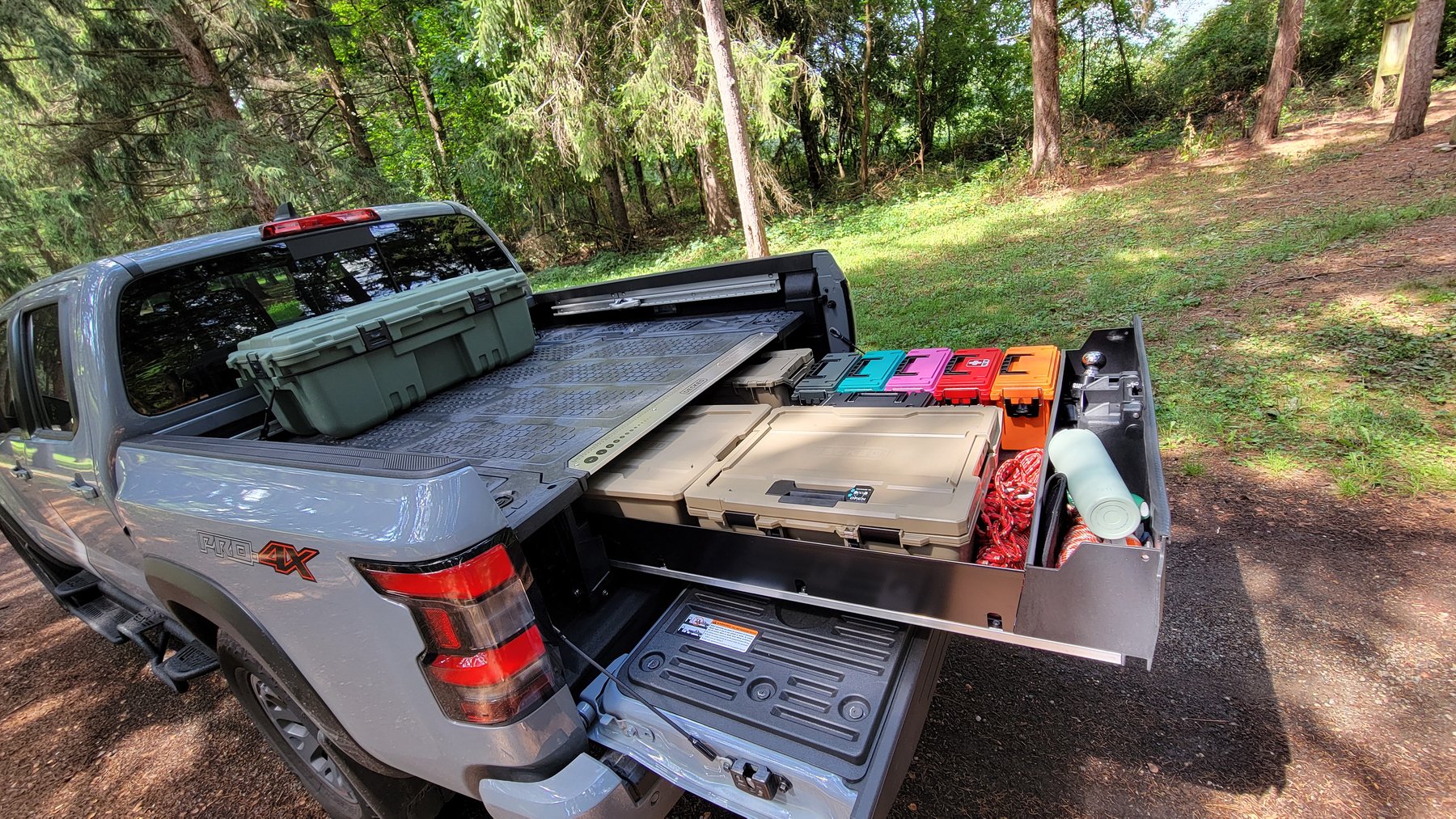
⭐ That is a legitimate engineering position and it deserves to be stated as one rather than treated as an obstacle. DECKED is weatherproof, lockable, rated to 1,000 lb, already bought and already installed, and it is the storage the whole bed layout is built around. A build is allowed to spend its payload on the thing the owner actually wants, and a spreadsheet that keeps proposing to delete it is answering a question nobody asked.
The practical consequence is now simply that DECKED is 177 lb of a budget that fits. ⭐ The bins policy closed this argument for good: DECKED was never the problem. ⚠ Weight and Balance vol 1 sets out what being over a limit knowingly would cost: longer braking distance, which is the one effect that does not care how gentle the terrain is; liability and warranty exposure; and gradual component wear. 🔴 It also establishes that this truck can be over GVWR while still inside both axle ratings and both tyre ratings — which is why the scale ticket matters more than the calculator.
3.11 The power system, in one place
The electrical plan changed underneath this arithmetic and the volumes that describe it are being caught up.
- ✅ EcoFlow River 3 Max Plus, 858 Wh, 24 lb — replaces both the planned 200 Ah LiFePO4 house bank and the Anker SOLIX F3000. Both are permanently out of the build.
- ✅ Renogy 200 W portable panel, 13.9 lb — matched to the Max Plus’s 220 W solar input, at 91 percent of the cap. ⚠ Needs an MC4-to-XT60 adapter.
- ⭐ The CPAP gate is met with room. At ResMed’s confirmed 10–25 W with humidifier and heated tube off, 858 Wh gives 3.9 nights at the worst case and 9.6 at the best, against a two-night requirement. The panel covers a night’s use in 24 to 60 minutes of good sun, and the truck’s 220 W car input refills it in under two and a half hours of driving.
- 🔴 Run the CPAP on the 12 V DC port, never the AC outlet. The inverter’s overnight idle draw would cost a meaningful share of the pack. The port is 12.6 V / 10 A / 126 W, which is ample for a 1–2 A load — but it permanently forecloses the humidifier, whose converter is rated to 156 W.
- 🔴 LiFePO4 will not charge below freezing, and the pack refuses rather than degrades. In a Michigan shoulder season the pack has to spend cold nights in the cab, not eight feet up in the tent with the machine it powers. That conflict is not yet solved.
3.12 What is still an estimate
🔴 Six figures in the tables above have never been weighed, and two of them are not even estimates. ⚠ The occupant line has come off this list — both adults were measured on 2026-08-31, at 220 and 172. It is deleted rather than struck through, because a list of outstanding work that still shows finished work is not a shorter list.
Table 12 — What is still an estimate
| Current | How to settle it | |
|---|---|---|
| 🔴 Camp chairs, pair | FILL — not weighed, not estimated | Bathroom scale, five minutes. Do not guess it |
| 🔴 Camp grill | FILL — not weighed, not estimated | Bathroom scale, five minutes. Do not guess it |
| Trailer tare tongue | 50 lb | 660 lb platform scale, empty trailer — a one-time constant, and the most important one on this list |
| Coupler to axle, L | 126 in | Tape measure, trailer level |
| Bedding in the tent | 8 lb | Bathroom scale, five minutes |
| Clothing and personal kit | 8 lb | Bathroom scale, five minutes |
⭐ The truck now has 24.5 lb of margin, and the largest single lever left is not on this list — it is the driver. Measured at 220 against 280 six months ago and heading for about 157, 63 lb is still to come at no cost in kit. 🔴 But it is not banked. Plan against today’s figures.
🔴 One certified-scale ticket and one platform-scale reading under the coupler, trailer coupled and loaded as it actually leaves. That replaces the largest guesses at once and turns this volume from a calculation into a measurement. Until then the tongue window above is arithmetic, not a fact.
References
- The loadout calculator and
build_weight_tables.py,The Trailer/Trailer Build/02-inputs/worksheets/— the item list these tables are generated from. Edit the script and re-run it; never hand-edit a generated table. ItsDEEPcolumn marks the retired no-trailer case and is kept for contrast only. - Weight and Balance volume 1, this project — the 1,100 lb payload label, the axle bounds, and the three escapes that do not work.
- Rooftop Tent volumes 2–3, this project — the tent decision and the DECKED correction.
- Water and Hygiene volume 1, this project — the one-gallon reserve and the filter that replaced the other seven.
- Vehicle Power and Camp Power and Solar, this project — the electrical design the River 3 Max Plus supersedes.
- Trailer Build volumes 2–3, this project — the tongue-weight target and the rail as a trim control.
Comments (0)